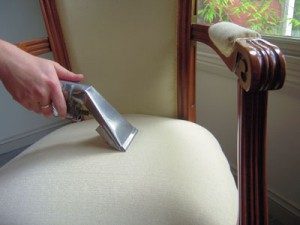
As the top local cleaning company in SW3, we are dedicated to offering high-quality upholstery cleaning services. If your upholstered furniture isn’t looking its best, give us a call and set up an appointment with one of our booking representatives. We work with some of the greatest local cleaners in the industry, and they come completely prepared with the best tools and materials, as well as a wealth of skills, expertise, and dedication.
Custom Cleaning Services, Tailored to Your Needs
We are familiar with the different types of upholstery and fabrics. This is why, based on the materials of your furniture, a custom cleaning plan will be created for you. Our local cleaners will choose the best cleaning solution and approach for your upholstered furniture, ensuring that the fibres of the fabric are not damaged.
The Best Choice for Professional Upholstery Cleaning in Chelsea SW3 – Cleaning Chelsea
We are a reputable cleaning service provider located in Chelsea SW3. We offer professional cleaning solutions, performed by some of the best experts. Trust us with the job, the high quality of all our services is guaranteed.
- Initial Inspection: We begin by testing the fabric and materials of your upholstery. The information we gather will help us select the most suitable cleaning approach.
- Specialised Cleaning Techniques and Equipment: We will use the best deep cleaning method for your upholstery, based on their fabric and materials.
- Final Inspection: We will check for any stains or product residue left behind at the end of the cleaning service.
Sustainable Cleaning Solutions for the Safety of our Planet
We utilise environmentally safe cleaning products and solutions to accomplish high-quality results while causing no harm to you or your family members. What is more, our products do not contain any harsh chemicals and will be gentle to the fibres of your upholstery.
Diverse Upholstery Materials and Their Specific Cleaning Needs
- Fabric Upholstery: Versatile and Common
- Materials: Includes cotton, linen, and microfiber.
- Cleaning Approach: Steam cleaning works best for this type of upholstery fabrics.
- Leather Upholstery: Elegant and Timeless
- Materials: Both real and faux leather materials.
- Cleaning Approach: Specialized leather cleaners and conditioners are used to clean and preserve the material, keeping it supple and preventing cracks.
- Velvet Upholstery: Luxurious and Delicate
- Materials: Silk, cotton or synthetic fibres.
- Cleaning Approach: Usually requires a gentle approach, dry-cleaning is a go-to in such cases.
- Wool Upholstery: Natural and Durable
- Materials: Woven from natural wool fibres.
- Cleaning Approach: In order to avoid shrinkage and damage, we use dry cleaning or hand cleaning.
Attention to Detail
Our professionals will provide you with a deep, thorough cleaning of your upholstery, reaching areas that are often overlooked or hard-to-reach, such as between the cushions, the underside of your furniture, the small crevices and little details. That way, we ensure that your entire upholstery piece is immaculate, disinfected and left in perfect condition.
Booking Your Upholstery Cleaning with Us
Simple Booking Process: If you are interested in our services, all you need to do is give us a call. We will schedule an appointment for you right away.
High Quality Upholstery Cleaning by Cleaning Chelsea in SW3
If you want to keep your upholstery in good condition, vacuuming it once a week will not suffice. As a result, a professional deep upholstery cleaning service, such as the one we provide, is the ideal option for you. We employ effective equipment and chemicals that penetrate the fibres to remove dust, filth, and grime from your upholstery. The best thing is that we can effectively remove all germs, bacteria, and allergies from your upholstery, leaving you and your family in a safe living environment.
Is a Professional Company Required for Your Professional Upholstery Cleaning?
- Extended Furniture Life and Enhanced Appearance: By properly cleaning your upholstery, you can not only improve its appearance but also preserve its longevity.
- For a Healthier Living Atmosphere: We will remove germs, bacteria, and allergies from the surface of your carpets, leaving them clean and sanitary.
- Customized Cleaning for Every Upholstery Type: Our knowledge of diverse upholstery materials guarantees that each piece of furniture is treated with the care and suitable cleaning method that it calls for.
Comprehensive Knowledge and Experience
Our cleaning professionals are experienced with a wide range of textiles and upholstered furniture. They will disinfect your furniture using the most advanced equipment and cutting-edge cleaning processes. We utilise dry and steam cleaning, which – based on the fabric of your upholstery.
Yes, we use professional cleaning supplies which ensure that all upholstery pieces are efficiently cleaned and no harm has been done to their fabric. Yes, the products and techniques we use are all eco-friendly and non-toxic. We prioritise your wellbeing and guarantee the safety of everyone in your home. We suggest you deep clean your upholstery once every 12-18 months. The frequency, of course, will vary based on the presence of children, pets or a lot of use.FAQs About Our Upholstery Cleaning Service
Get in touch with the Professionals from Cleaning Chelsea!
Cleaner Chelsea in SW3 is the finest choice for professional upholstery cleaning. We are professionals who stand by the high standards of our work. If you need help cleaning your upholstered furniture, please do not hesitate to contact us.